Air Fryer Food Preservation Made Simple
By Daniel Okafor • 6th Nov
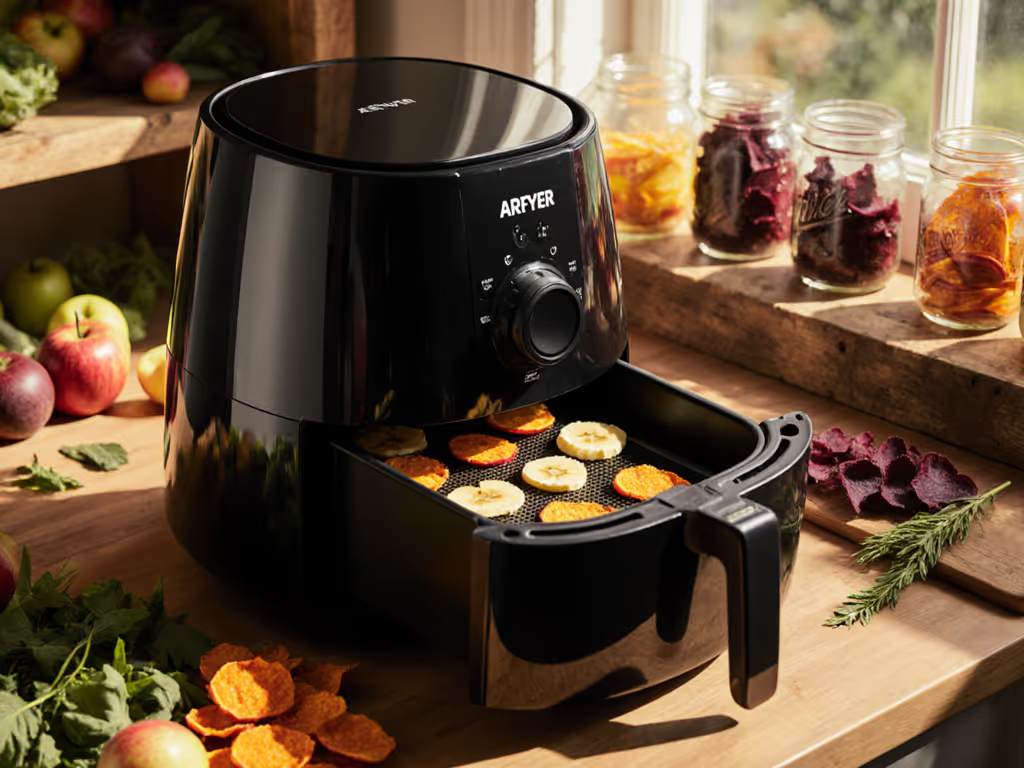
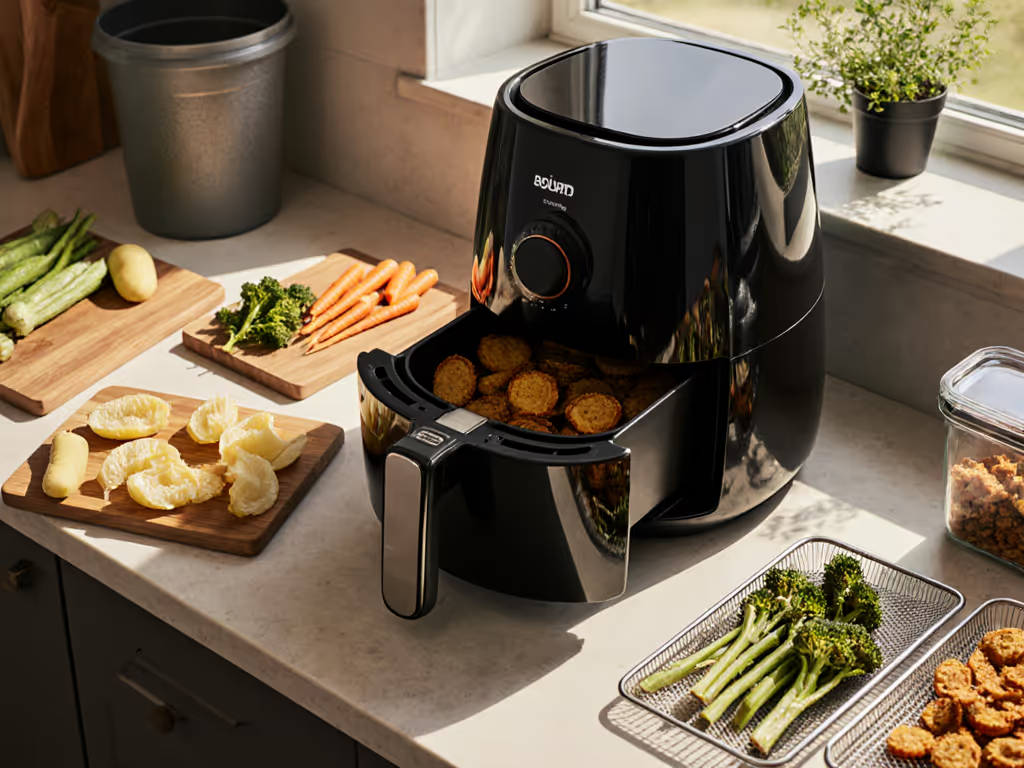
Let's cut through the noise: air fryer food preservation isn't about magic pickling techniques or flash-freezing tricks. My neighbor learned this the hard way, he'd waste hours searching for "air fryer pickling techniques" online, only to discover his machine can't replace vinegar brines. But when we shifted focus to actual preservation methods like dehydration, his leftovers stopped becoming landfill. Today, we'll tackle air fryer dehydration (the one real food preservation superpower most units have), plus how blanching and smart storage complete the system. For step-by-step settings, mesh trays, and storage pointers, see our air fryer dehydrator guide. No hype, no guesswork. Just your weekly meal prep made boringly reliable.
Why Air Fryer Food Preservation Actually Works (FAQ Deep Dive)
Q: Can I really preserve food with an air fryer?
A: Yes, but only through dehydration, not pickling or freezing. Let's be crystal clear:
- ✖️ Air fryer pickling techniques? Myth. Pickling requires acidic brines (vinegar/citric acid) to lower pH. Your air fryer manipulates air, not chemistry.
- ✖️ Air fryer flash freezing? Impossible. Freezing needs sub-zero temps; air fryers only remove moisture via warm airflow.
- ✔️ Air fryer dehydration? This is where your appliance shines. By circulating 125-150 F air for 4-12 hours, it pulls moisture from food, slowing microbial growth while locking in nutrients. A fact confirmed by USDA guidelines: moisture removal below 20% water content prevents spoilage.
My neighbor's "aha" moment? Realizing his air fryer wasn't for creating preservation methods (it was for executing dehydration faster and more evenly than his oven). We logged temps and spacing for weeks. Now his dried apples last 6 months, and he feeds his kids snacks without additives.
Q: How do I dehydrate correctly without burning or under-drying?
A: Precision beats prayer. Air fryer dehydration fails when people skip three non-negotiables:
-
Temps must stay LOW (125-150 F). Most air fryers default to 300 F+, too hot for preservation. Why? High heat cooks instead of dehydrates, sealing moisture inside. If your model lacks a "dehydrate" preset (like the Instant Pot Duo Crisp's dedicated setting), manually set 130 F for fruits, 145 F for meats.
-
Spacing is non-negotiable. Never let pieces touch. Overcrowding traps steam, exactly what you're fighting. My golden rule: "Fingertip spacing": leave a 1/2 inch gap between items. Rotate trays every 2 hours for even airflow. If you're adding layers, use these multi-layer stacking techniques to keep airflow strong.
-
Times scale with portion size. A single apple slice dries in 3 hours; 8 slices take 5.5. Always pair times with internal temp targets:
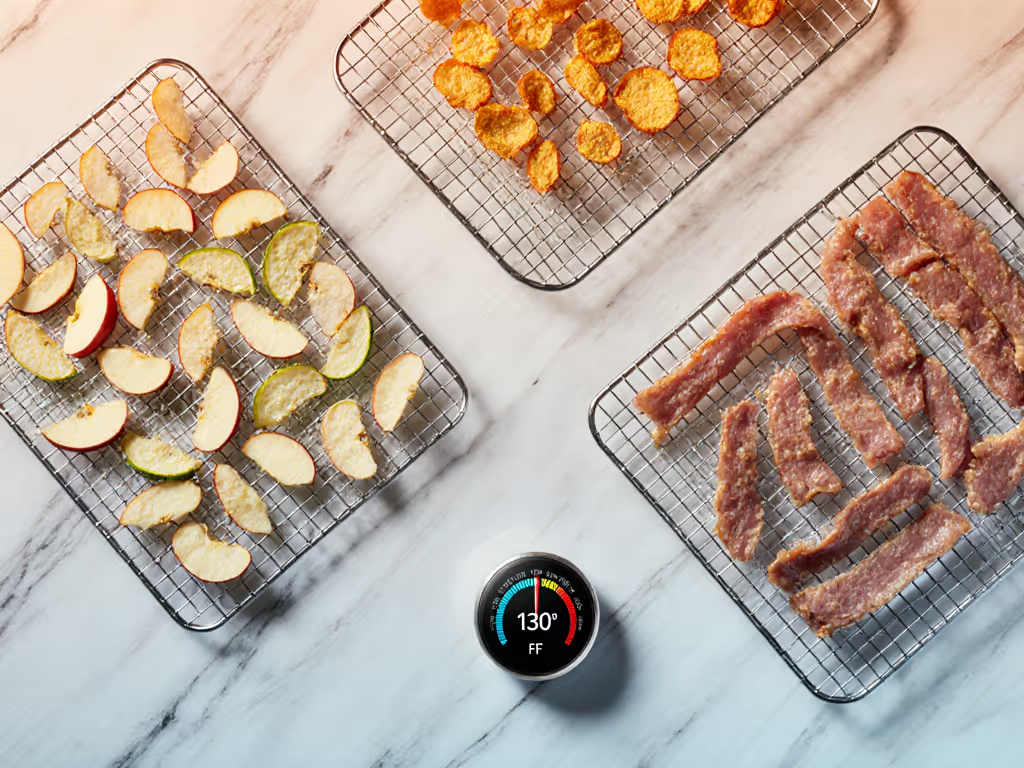
- Fruits: 130 F internal (pliable, no moisture beads)
- Veggies: 125 F internal (leathery, bends without cracking)
- Meats: 160 F internal (rock-hard, snaps when bent)
Q: What about blanching? Isn't that part of preservation?
A: Absolutely, but before dehydration. Air fryer blanching mimics traditional boiling to deactivate enzymes that cause spoilage. Here's the foolproof method:
- Blanch veggies in boiling water 60 seconds (e.g., carrots, green beans).
- Ice-bath shock for 30 seconds to stop cooking.
- Pat dry - critical before air frying. Wet surfaces = uneven drying.
Skip blanching, and your dehydrated zucchini might turn brown and mushy in storage. Do it right, and it'll stay vibrant for 6 months. Blanching also cuts dehydration time by 25%, a huge win for busy households.
Q: How do I store dehydrated food safely?
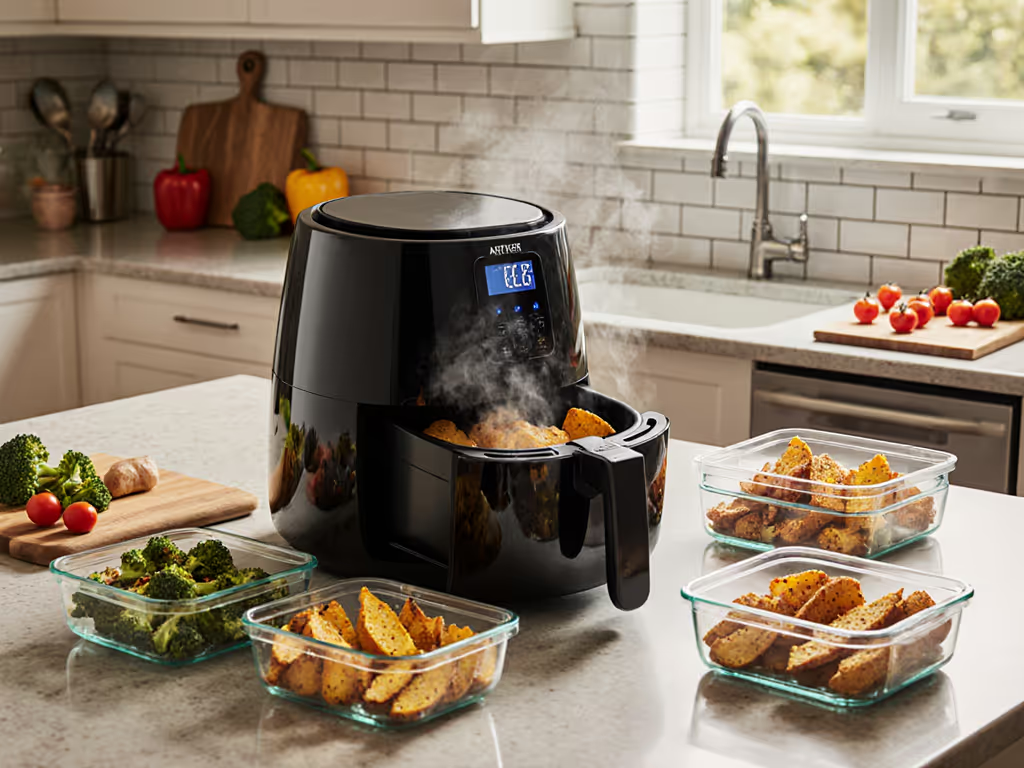
A: Air fryer food storage isn't like leftovers. Moisture is the enemy. Follow this protocol:
- Cool completely on a wire rack (1 hour). Trapped heat = condensation.
- Test dryness: Bend a piece. Fruits should crack slightly; meats should snap.
- Store in vacuum-sealed bags or glass jars with oxygen absorbers. Never use plastic containers; they breathe moisture.
Pro tip: Add a silica packet (like those in beef jerky bags) to suck residual humidity. Shelf life jumps from 1 month to 1 year. This is why dehydration is preservation: it's not just "snack prep."
Q: Can I dehydrate multiple foods at once?
A: Only if they share temp/time needs. Dehydrating strawberries and beef jerky together fails because:
- Strawberries need 130 F for 6 hours
- Jerky needs 160 F for 8 hours
Always group by moisture density:
| Food Type | Temp | Time Range | Shake/Flip Cues |
|---|---|---|---|
| Fruits (thin) | 130 F | 4-6 hrs | Hour 2 & 4 |
| Veggies (root) | 140 F | 5-7 hrs | Hour 3 & 5 |
| Meats (jerky) | 160 F | 6-8 hrs | Hour 3 & 6 |
Scaling up? For 8 chicken thighs (vs. 2), add 1.5 hours, but only if you use a multi-rack setup with 1-inch gaps between layers. See the best stackable racks for consistent drying. Never stack baskets; airflow dies.
Your Turn: Make Consistency Boring (In a Good Way)
Dehydration isn't glamorous. But when you pair times with internal temp targets, space pieces precisely, and store with zero moisture? Scale portions, not stress; conversions make consistency your superpower. That's how my neighbor went from mealtime panic to Sunday batch prep autopilot, drying 3x the veggies for lunches without checking his phone once. For planning and portioning, our batch cooking guide shows which foods scale well and how to fix common issues.
Ready to transform leftovers into pantry staples? Start small: dehydrate 4 apple slices tomorrow using the 130 F / 4 hour rule. Test dryness. Store right. Do it twice, and you'll trust the process. That's the beauty of air fryer food preservation: it's not a kitchen hack. It's a repeatable system where boring is brilliant.
Make consistency boring, in a good way.
Further Exploration: Try dehydrating carrot coins (140 F, 6 hours) after blanching, they rehydrate perfectly in soups. For a deeper dive into moisture science, USDA's Complete Guide to Home Food Preservation breaks down water activity levels. Your next step? Log one dehydration run in your notes app: temps, spacing, outcome. Next time, you'll skip the guesswork.
Related Articles