Air Fryer Dehydrator: No More Batch Guesswork
By Maria López • 31st Oct
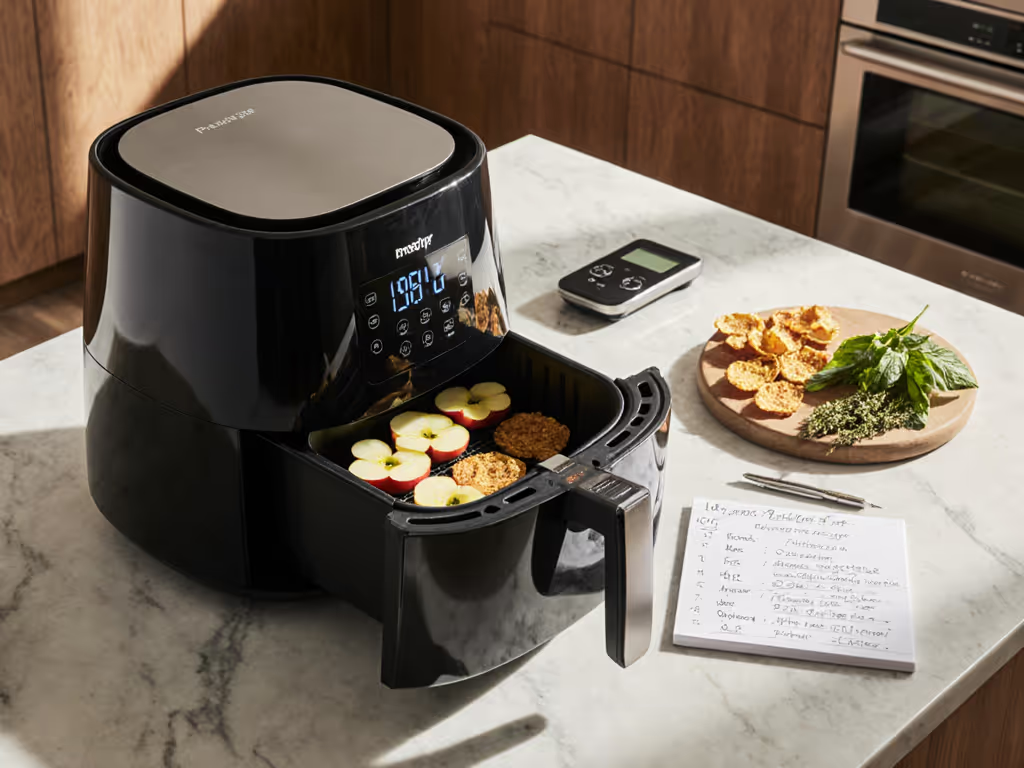
Forget quart claims and wattage wars - the best air fryer dehydrator combo solves your real problem: knowing exactly how many portions fit before you press start. Paired with smart air fryer dehydration techniques, you'll eliminate the guesswork that turns batch cooking into a stress spiral. I've tracked hidden costs long enough to know: mismatched capacity wastes more money than any coupon saves. Let's fix it with math your kitchen actually uses.
How Many Portions Fit? (Not Just Quarts)
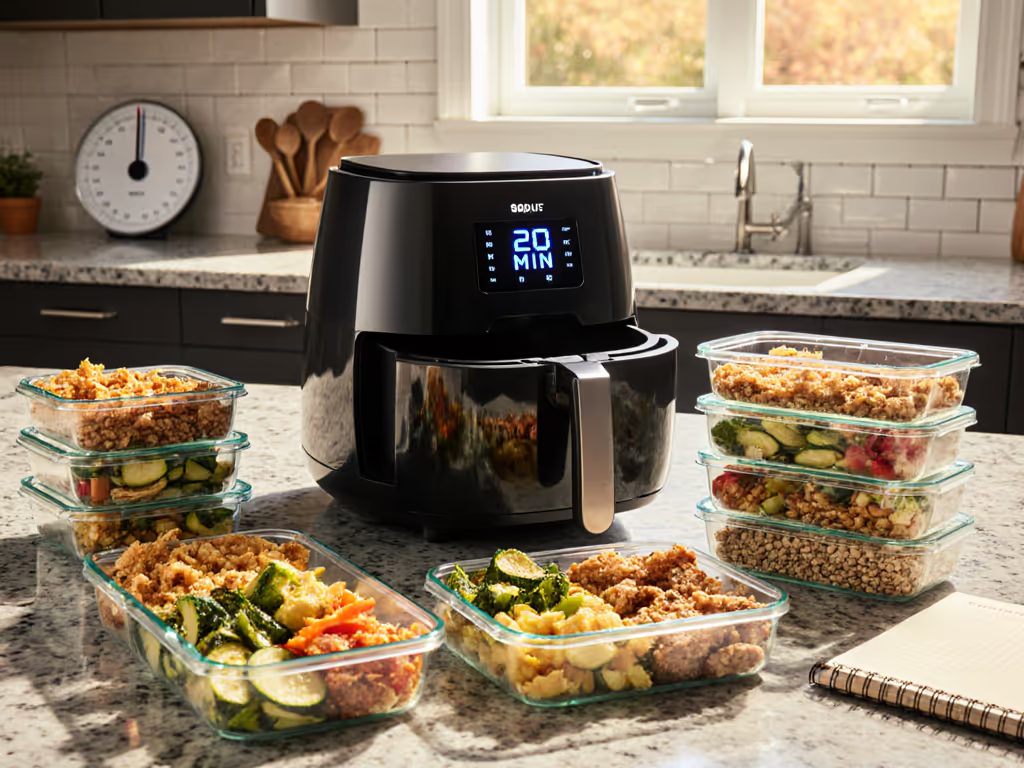
Marketing says "6-quart," but your family needs wings, not cubic inches. Measure your standard portions first - this is your only "yes/no" decision gate for capacity:
- 1.2 lbs chicken wings = 8-10 pieces (standard family side)
- 2 medium sweet potatoes = 4 fry servings
- 1 cup herbs = 4 herb bundles for drying
If the basket can't hold these in one flat layer, it's not your unit. For a side-by-side look at how 2-3 qt vs 5+ qt units change portion counts, see our small air fryer size guide. Stacking racks? Only if they add 30%+ usable space without blocking airflow. Any less, and you're paying for dead zones. I stopped trusting specs after realizing my "family-sized" fryer needed 3 batches for 4 chicken breasts. Now I map portions like a spreadsheet, because per-portion cost never lies.
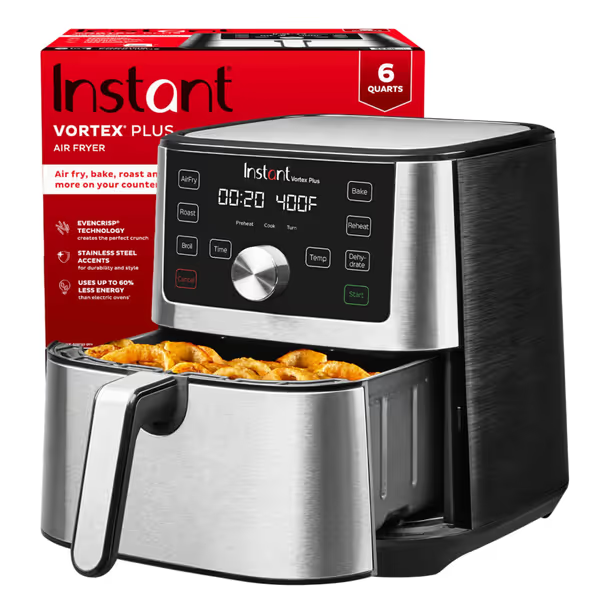
Instant Pot Vortex Plus 6QT XL Air Fryer
Versatile 6-in-1 air fryer for quick, crispy, family-sized meals.
$89.99
Capacity6 Quart (Up to 6 portions)
Capacity6 Quart (Up to 6 portions)
Pros
EvenCrisp Technology for 95% less oil.
Dishwasher-safe basket for easy cleanup.
Fast cooking, little to no preheating.
Cons
Durability concerns reported by some users.
Customers find this air fryer to be a quality appliance that cooks everything well, particularly praising its ability to reheat chicken and pork chops and make perfectly cooked tri-tip. Moreover, the appliance is easy to use and clean, with one customer noting that the trays can go in the dishwasher. Additionally, customers appreciate its quick cooking time, with one mentioning a 5-minute cooking time for chicken thighs. However, customers disagree on the air fryer's functionality, with some reporting it stops working after a few months.
Customers find this air fryer to be a quality appliance that cooks everything well, particularly praising its ability to reheat chicken and pork chops and make perfectly cooked tri-tip. Moreover, the appliance is easy to use and clean, with one customer noting that the trays can go in the dishwasher. Additionally, customers appreciate its quick cooking time, with one mentioning a 5-minute cooking time for chicken thighs. However, customers disagree on the air fryer's functionality, with some reporting it stops working after a few months.
Batch Math That Prevents Cold Dinner Chaos
Throughput failure is the #1 hidden cost - not the appliance price. Do this calculation before buying:
"Total meal portions ÷ single-batch capacity = batch count. If >2, it's a throughput trap."
Example: Feeding 4 people wings? 10 wings per batch means 2 batches. But if first batch cools while second cooks, you're losing 15 minutes to reheating. That's $0.37 in wasted electricity (at $0.15/kWh) plus your time stress. Solution: Either buy a unit fitting all portions in one wave or integrate a holding strategy (like a 170°F oven) into your workflow. No model compensates for this math - only honest capacity matching does. Get proven batch-cooking techniques and fixes to keep the first round hot while the second finishes.
Dehydration Settings: Temperatures That Don't Waste Time
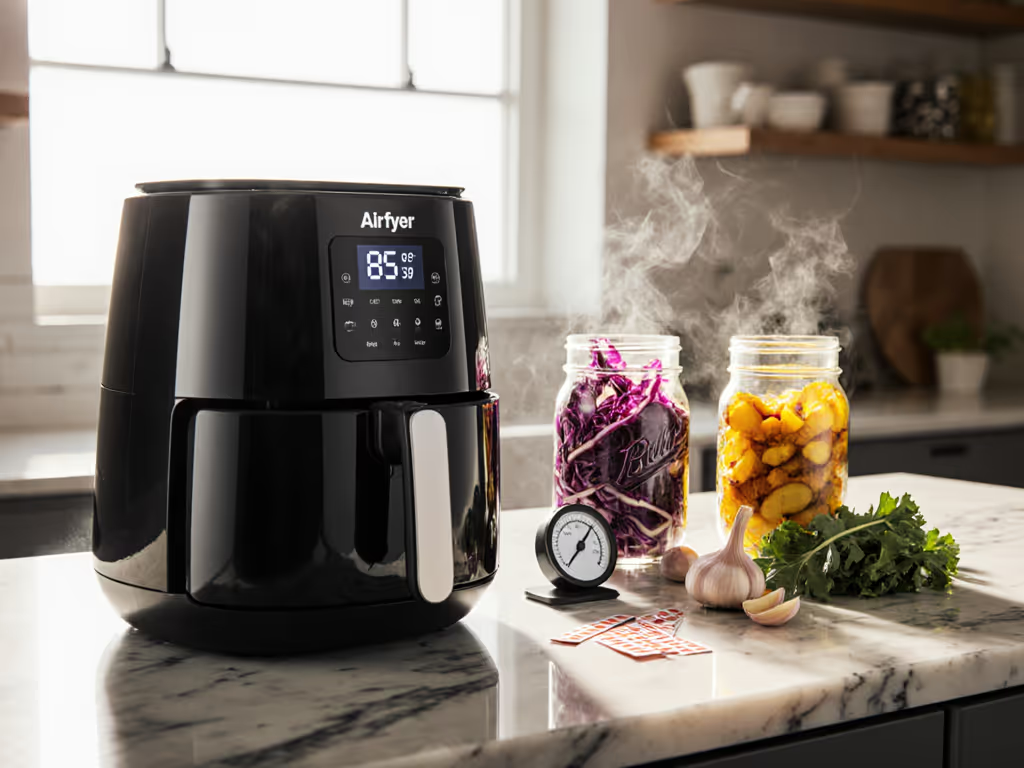
Air fryer dehydration settings aren't one-size-fits-all. Wrong temps turn fruit leather into leathery disappointments or jerky into charcoal. Use this no-fluff guide:
| Food Type | Temp Range | Time per 1/4" Thickness | Hidden Cost Risk |
|---|---|---|---|
| Air fryer jerky | 155-165°F | 4-6 hours | Under-temp = spoilage risk; $5 meat lost |
| Air fryer fruit leather | 135-145°F | 6-8 hours | Over-temp = energy waste; $0.42 extra cost |
| Air fryer dried herbs | 120-130°F | 2-3 hours | Too slow = lost nutrients; $1.20/hr opportunity cost |
Note: Every 5°F below target adds 15% time - and energy costs pile up. Run your model's hourly kWh rate through this formula: (Wattage ÷ 1000) x Hours x $0.15.
Hidden Accessory Costs That Break "Budget" Models
Promo prices hide accessory traps. Flag these before buying:
- Disposable liners: $12 for 100 sheets = $0.06 per batch. For 10 dehydration cycles/month, that's $7.20/year - wiping out any coupon savings.
- "Compatible" racks: Third-party stacking racks often block airflow. Test fit before committing - you'll waste $22 on returns if they don't stack right.
My rule: If the unit needs extra trays for basic dehydration (e.g., fruit leather), skip it. True "buy once" means zero mandatory accessories. Remember: Fit the food, then the budget. I've returned units that needed proprietary racks for simple herb drying, because liners and returns cost more than upgrading upfront.
Energy Math: Why Dehydration Isn't "Free"
Air fryers use less energy than ovens, but dehydrating runs for hours. Calculate your real cost:
- Sample: 1700W unit running 6 hours = 10.2 kWh
- Cost: 10.2 kWh x $0.15 = $1.53 per dehydration cycle
- Savings vs. oven: Ovens use 2.3-5.0 kWh per hour - so dehydration here costs $2.07-$4.50 less per cycle.
But here's the kicker: Smaller units run longer at lower temps. A 4QT model dehydrating apples may take 8 hours ($2.04) vs. a 6QT taking 6 hours ($1.53). That $0.51 difference adds up to $6.12/year for biweekly use. For a deeper breakdown of energy use versus ovens, see our air fryer vs oven efficiency comparison. Not huge - but when paired with wasted food from failed batches? It matters.
The Final "Buy Once" Checklist
Avoid impulse buys with these yes/no gates. Answer all "yes" before purchasing:
- ✅ Capacity test: Does it fit 4 chicken breasts without touching sides? (Prevents uneven cooking)
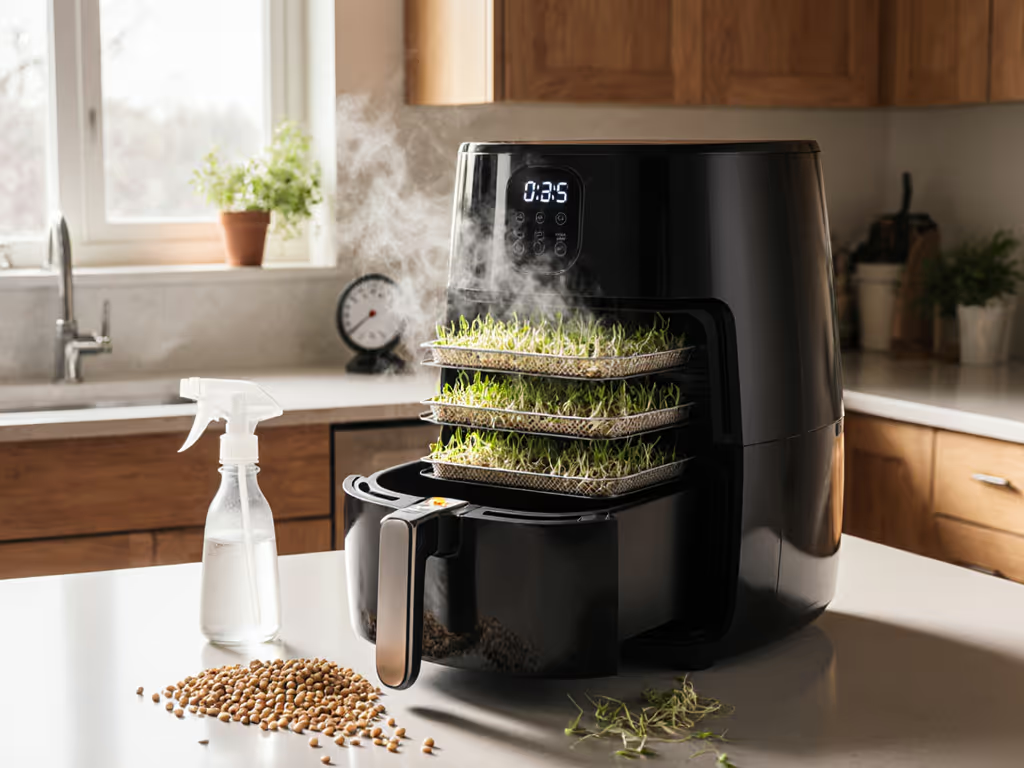
- ✅ Dehydrate proof: Can it hold 3 herb bundles at 130°F without overlapping?
- ✅ Accessory audit: No mandatory liners/trays for basic dehydration?
- ✅ Energy transparency: Wattage clearly listed? (Estimate $/hr via
(Wattage/1000)*$0.15)
If any answer is "no," walk away. I learned this chasing "premium" specs - only to drown in returns and liner costs. Matching portions first means never reheating cold first batches or rebuying due to failed jerky.
Your Actionable Next Step
Measure your most-cooked meal right now. Grab your chicken breasts, sweet potatoes, or herbs. Lay them flat in a baking dish. Now measure that dish's width/depth. Any best air fryer dehydrator combo must fit this exact footprint - not just claim "6QT." This 5-minute test prevents $200 in wasted money from batch guesswork. Do this before browsing one model. Fit the food, then the budget. Your kitchen's sanity depends on it.
Related Articles