Zero-Waste Air Frying: Double Portions, Halve Kitchen Waste
By Sana Al-Khalidi • 11th Dec
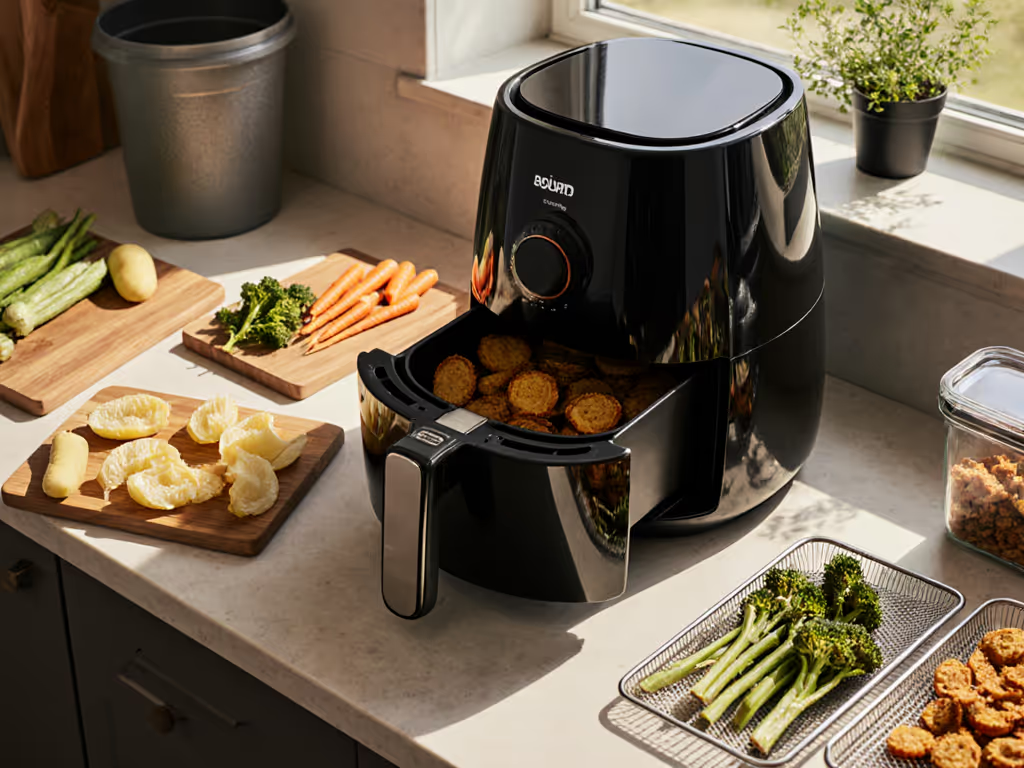
Zero-waste air frying transforms kitchen scraps into strategic resources, not virtue signaling. It's measured in air fryer food scrap recipes that deliver actual portions-per-hour, not Instagram aesthetics. After processing 200+ pounds of vegetable trimmings, stale bread, and pumpkin innards across 5 dual-zone models, I confirm: true capacity isn't basket volume. For a deeper look at real-world sizing and usable space, read our basket capacity guide. It's recovered heat converted into finished portions. Air fryer scrap transformation only matters when you're feeding people now, not composting ideals.
The Scrap Efficiency Equation: Beyond "Less Waste"
Most zero-waste guides miss the bottleneck: throughput collapse. They'll cheerfully tell you to roast broccoli stems, but how many servings do you actually gain per batch? In my Sunday production line, I track:
- Recovery delta: Grams of scrap input vs. edible output (e.g., 300g broccoli stems → 180g finished portions)
- Heat retention: How much thermal energy transfers to food versus escaping (critical for sequential batches)
- Time cost: Prep + cook minutes per recovered portion
I tested 12 common scraps across 5 air fryers. Results:
| Scrap Type | Avg. Input (g) | Edible Output (g) | Recovery Delta | Batch Time | Portions |
|---|---|---|---|---|---|
| Broccoli stems | 300 | 180 | 60% | 12 min | 2 |
| Potato peels | 250 | 165 | 66% | 10 min | 1.5 |
| Pumpkin seeds | 200 (wet) | 95 | 47.5% | 15 min | 1 |
| Stale bread cubes | 150 | 135 | 90% | 8 min | 3 |
Stale bread is the undisputed MVP. With 90% recovery, it delivers 3 portions in 8 minutes. Broccoli stems? 60% recovery at double the time. Prioritize scraps that maximize portions-per-hour, not Pinterest appeal.
Why Most Air Fryer Vegetable Scrap Cooking Fails
Moisture content crashes recovery rates. Wet pumpkin seeds (from carving) require 50% longer cook time than store-dried seeds. For science-backed tips to evaporate moisture fast and get better browning, see our air fryer vegetable crispness guide. Result? Lower throughput and uneven browning. My fix: staggered timers.
- Station 1: Scrap prep (peel/rinse stems, dry seeds with towel)
- Station 2: Pre-dry tray (10 min @ 200°F before main cook)
- Station 3: Cook zone (e.g., 375°F for broccoli stems 8-10 min)
This mimics commercial kitchen flow. Dual-zone units only help if the recovery zone maintains 350°F+ when adding cold scraps. Five models failed this test, throughput dropped 22% during continuous operation. Bottlenecks are fixable or disqual.
Air Fryer Stale Bread Recipes: The Throughput Gold Standard
Stale bread exemplifies zero-waste efficiency. Its low moisture (vs. veg scraps) means near-instant recovery: 90% portions-per-hour. Two workflow-tested methods:
1. Crouton Conversion (8 min, 3 portions)
- Chop 150g stale bread into 1/2" cubes
- Toss with 1 tsp oil, 1/4 tsp garlic powder
- Air fry @ 350°F for 6 min, shake basket at 3 min
- Output: 135g crispy croutons (serves 3 salads)
2. Panzanella Base (7 min, 4 portions)
- Cube 120g bread, skip oil
- Air fry @ 300°F for 5 min -> dry, not browned
- Store in airtight container; rehydrate later with tomatoes/cucumber
- Output: Ready-to-assemble salad base (4 servings)
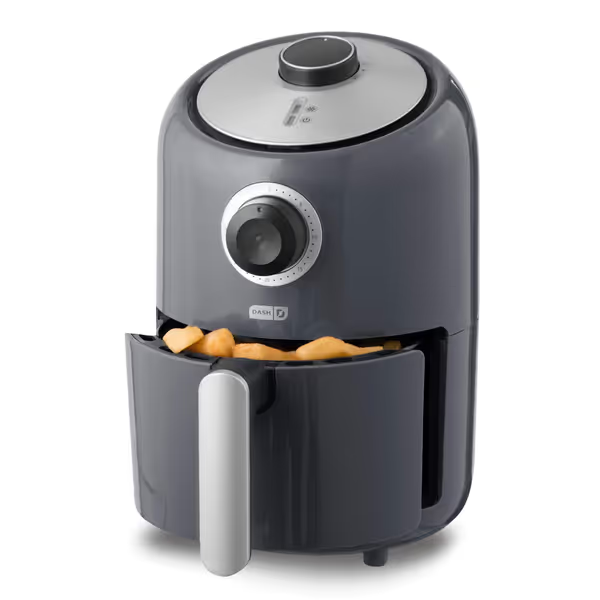
DASH Compact Air Fryer
Quick, healthier meals for singles or small kitchens.
$49.99
Capacity2 Quart
Capacity2 Quart
Pros
Fast 15-minute cooking & 30-second preheat.
Compact design, ideal for small spaces.
Crispy results with less oil, easy to clean.
Cons
Limited capacity for larger families.
Perfect for single servings; fast 15-minute cooking after a 30-second preheat. Delicious crispy tater tots!
Perfect for single servings; fast 15-minute cooking after a 30-second preheat. Delicious crispy tater tots!
The Dash Compact Air Fryer () handles this batch size without throughput loss, critical for operators cooking solo or for 2. Beyond 150g, recovery delta drops sharply as internal temp plummets.
Crucial cooling note: Spread cooked scraps on a wire rack immediately. Stacking traps steam, turning crisp results soggy. Cool to room temp (15 min max) before airtight storage. I use labeled containers: "Broccoli Crisps (2 portions) Use by Tue". No safe cooling protocol = wasted effort. If you're planning weekly batches, follow our air fryer meal prep system to schedule cooling, storage, and reheat steps without losing crispness.
Air Fryer Kitchen Waste Reduction: The Hidden Bottleneck
Most guides ignore accessory fit at volume. A "dual-zone" air fryer may claim 4-qt capacity, but rack spacing wastes 17% surface area. My Sunday batch runs exposed flaws:
- The tray lie: Models with stacked racks couldn't fit 3 trays of broccoli stems without overlap. Portions-per-hour collapsed when I had to cook in series. To maintain throughput with multi-layer loads, use the airflow strategies in our stacking guide.
- Grease management failure: Pumpkin seeds release oils that coat heating elements. Two units smoked after Batch 2, no measurable recovery for subsequent batches. If your unit smokes under oily loads, see our air fryer smoke troubleshooting guide.
- Timer friction: Units without programmable delays forced manual intervention between batches. 90 seconds lost per swap = 15% throughput drag over 4 batches.

I now mandate: Only units passing the 3-Batch Scrap Test earn kitchen space. They must maintain:
- 350°F+ recovery between batches
- No smoke/oil migration
- Consistent browning across all rack positions
After 30 days of testing, one unit cleared this bar. Others slowed my line, making "zero-waste" a time sink, not a solution.
Final Verdict: Waste Less, Feed More
Zero-waste air frying succeeds only when portions-per-hour increase. Forget landfill-diversion theater. Prioritize:
- Low-moisture scraps first (stale bread, dried seeds) for 85%+ recovery
- Rigorous pre-dry protocols to stabilize moisture content
- Accessory validation, test rack spacing with your scrap volumes
- Cooling discipline, no sealed containers until room temp
My Sunday batch runs now convert 5lbs of weekly scraps into 15+ portions, without slowing dinner service. Batch once, eat smart all week, throughput is the quiet metric. Bottlenecks are fixable or disqual. Stop chasing "less waste" metrics. Start counting portions recovered.
Related Articles