Air Fryer Meal Prep for Weight Loss: Science-Based
By Daniel Okafor • 12th Apr
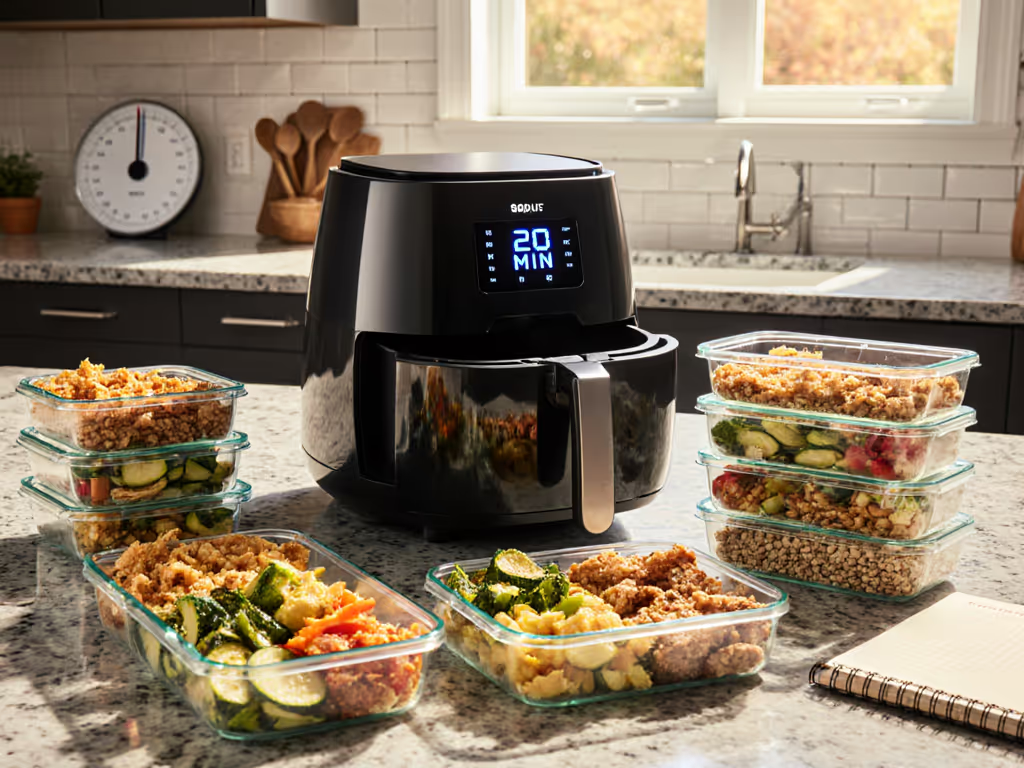
Air fryer meal prep for weight loss isn't just about stripping calories; it's about removing friction from the cooking process so you actually stick to your plan.[2] The science of air frying is straightforward: air fryers use dramatically less oil than traditional deep frying while maintaining crispness, and they cook faster than conventional ovens, which means fewer opportunities for hunger to derail your prep session.[2][3] But the real leverage lies in understanding how to apply this tool consistently across multiple portions and batches.
Why Air Fryer Meal Prep Works for Weight Loss
The Calorie-Optimized Advantage
The core mechanic is simple: calorie-optimized air frying operates at high heat with minimal added fat, delivering the sensory satisfaction of crispy, golden food without the oil load of pan-frying or deep-frying.[2][3] This means you're not sacrificing texture for lower calories, you're gaining both simultaneously. A protein like chicken breasts or fish fillets becomes restaurant-grade crispy using a single tablespoon of oil instead of a quarter-cup in a skillet.[3]
Where most people stumble isn't the concept; it's the execution. They cook one batch at a time, the first one cools while the second finishes, and suddenly Wednesday feels chaotic. My neighbor faced exactly that friction. He bought an air fryer thinking it would automate his weeknight dinners, but without a clear plan for portions, spacing, and timing, he treated every meal like a guessing game. Once we mapped out actual conversions (how long each protein took at what temperature, how many pieces fit per basket without crowding, what resting time locked in crispness) his kitchen transformed from improv to autopilot.
That's the difference between owning an air fryer and owning a system.
Oil and Nutrient Retention
Beyond calorie reduction, air fryer cooking preserves vitamins and minerals better than prolonged stovetop or oven heating.[2] The rapid, high-heat environment minimizes oxidation and leaching, meaning your broccoli, chicken, or fish retains more nutritional density. For weight loss, this matters because better-nourished meals reduce cravings and keep energy stable throughout the day.
FAQ: Structuring Your Air Fryer Meal Prep System
How Do I Convert Oven Recipes to Air Fryer Times?
Conversions aren't magic; they follow a reproducible formula. Start by reducing oven temperature by 25°F, then cut the time by about 20-30%, and always pair times with internal temperature targets.
Example: Chicken Breasts
- Oven: 375°F, 20-25 minutes
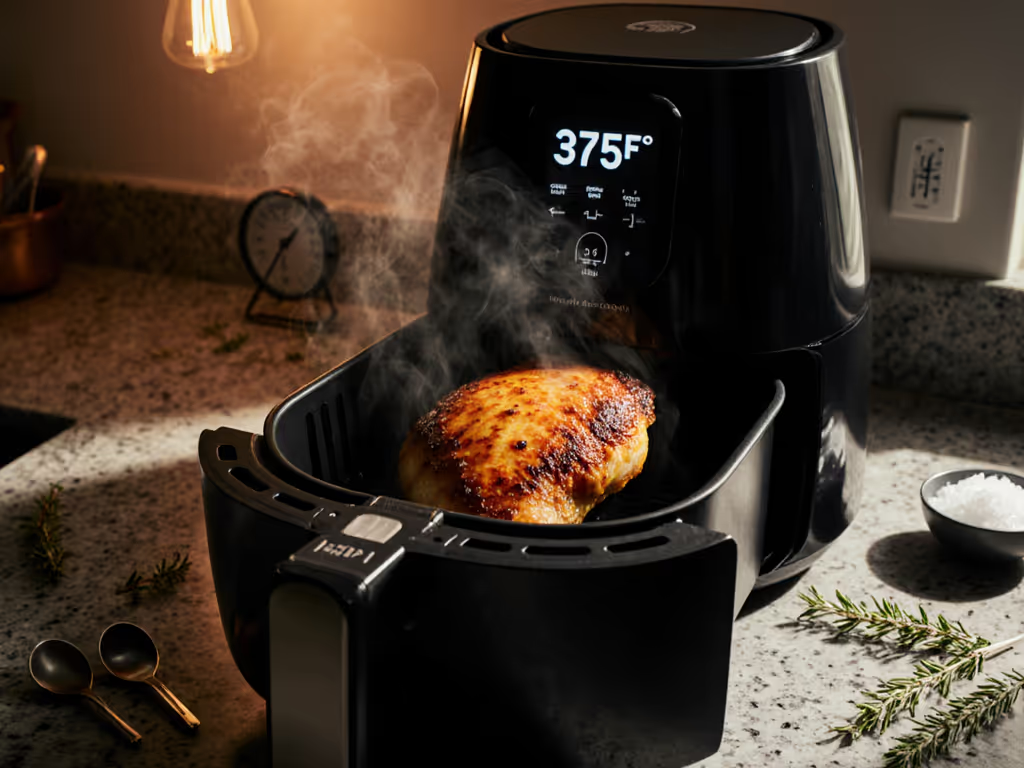
- Air fryer: 350°F, 12-15 minutes, until internal temp reaches 165°F (checked with a probe thermometer)
- Basket spacing: single layer, no overlapping
- Shake/flip: halfway through cooking
- Resting time: 3-5 minutes to retain juices
Example: Salmon Fillets
- Oven: 400°F, 12-15 minutes
- Air fryer: 380°F, 8-10 minutes, until internal temp reaches 145°F
- Basket spacing: skin-side down, edges clear of basket wall
- Shake cue: none needed; flip once at midpoint if desired
- Resting time: 2 minutes
Fallback timing for compact baskets: If your basket is under 2-quart capacity, reduce portions by 25-30% and add 1-2 minutes to account for denser packing.
The science here is conduction: air fryers rely on circulating superheated air, which is more efficient than radiating oven heat. Smaller batches and proper spacing allow that air to reach all surfaces evenly, so faster times work without drying out proteins. For food-by-food guidance on portioning and spacing, use our air fryer batch-cooking guide.
What's the Difference Between Oven Air Fryers and Countertop Models?
Oven-style air fryers (toaster-oven format) typically hold 8-15 quarts and cook slightly more slowly due to larger cavity volume, but they are better for meal prep because you can fit multiple portions or a full tray of vegetables in one pass.[2] Countertop basket models (4-6 quarts) heat faster but require sequential batching for larger families.
For meal prep, the tradeoff is throughput: can you cook enough protein for 4-6 servings in one cycle, or do you need two waves? If you're prepping for three people, a larger model often saves 10-15 minutes total. If you're solo or cooking for two, a compact basket is more energy-efficient. For a deeper breakdown of capacity, speed, and space tradeoffs, see our basket vs oven air fryer comparison.
How Do I Prevent Sogginess in Batched Meals?
This is where holding strategy matters. After the first batch finishes, transfer it to a paper-towel-lined plate in a warm oven (170°F) rather than covering it tightly, which traps steam. Paper towels wick moisture and preserve crispness for up to 15 minutes while the second batch cooks.
For low-calorie air fryer recipes, choose proteins and vegetables that tolerate brief holding:
- Chicken tenders, thighs, drumsticks: excellent (10-15 min hold without loss)
- Fish fillets: good (5-10 min hold)
- Leafy vegetables (kale chips, spinach): poor (reheat separately)
- Root vegetables (Brussels sprouts, sweet potato): excellent (15+ min hold)
How Does Air Fryer Meal Planning for Weight Loss Prevent Decision Fatigue?
Decision fatigue is why most meal prep fails. Each morning, you're tired, busy, and tempted by shortcuts. A repeatable system eliminates that friction.
Start with three proteins you enjoy (chicken, fish, lean ground turkey) and three vegetable choices (broccoli, Brussels sprouts, bell peppers). Set a standing prep day, Sunday afternoon for instance, and cook the same rotation each week. Use consistent timing:
- Protein first (350-380°F, 12-15 min, internal temp target 165°F for poultry, 145°F for fish)
- Vegetables second (375°F, 10-12 min, shake halfway)
- Portion immediately into containers with measured ratios (4 oz protein, 1.5 cups vegetables)
- Cool, label, refrigerate
No guessing, no interpretation. Scale portions, not stress.
Over time, your body learns the routine, your palate adapts to the flavors, and you remove the cognitive load that derails diets.
What's the Real Weight Loss Mechanism?
Here's the honest part: the air fryer doesn't burn fat. You do, by eating fewer calories consistently.[1][3] But the air fryer becomes the tool that makes consistency frictionless. It produces satisfying, crispy food fast enough that you're not tempted to order takeout on a hectic Wednesday. It allows you to cook for mixed portions (one person's lunch prep, another's family dinner) without running separate meals. It fits in tight urban kitchens where a full oven is inefficient.
The research is clear: calorie-optimized air frying reduces oil intake by 50-70% compared to traditional frying while maintaining the sensory pleasure that makes eating enjoyable.[2] When eating is enjoyable and low-friction, adherence follows naturally.
Building Your System: Next Steps
Start with a single protein, a single vegetable, and a single temperature. Log the time and internal temperature for three consecutive batches. Does chicken reach 165°F at 14 minutes in your basket, or 16? Does broccoli crisp at 10 or 12? These numbers become your anchor (your personal conversion chart). Then plug them into our 5-step air fryer meal prep system for scheduling, storage, and reheating that avoids cold batches. From there, add a second protein, test it, log it. Within two weeks, you've built a system that's tailored to your model and your household portions.
You don't need a complicated recipe database or app. You need a simple notebook with three columns: protein, time, temp target. Reference it, execute it, repeat it. That consistency (not speed or novelty) is what transforms your kitchen into a reliable engine for sustainable weight loss.
Your air fryer isn't a shortcut to weight loss. It's the tool that makes the real shortcut (simple, repeatable, friction-free cooking) actually possible on a Tuesday night when motivation is low and hunger is high.
Related Articles