Air Fryer Brunch Bundles: Capacity + Cleanup Made Simple
By Aiko Tanaka • 19th Mar
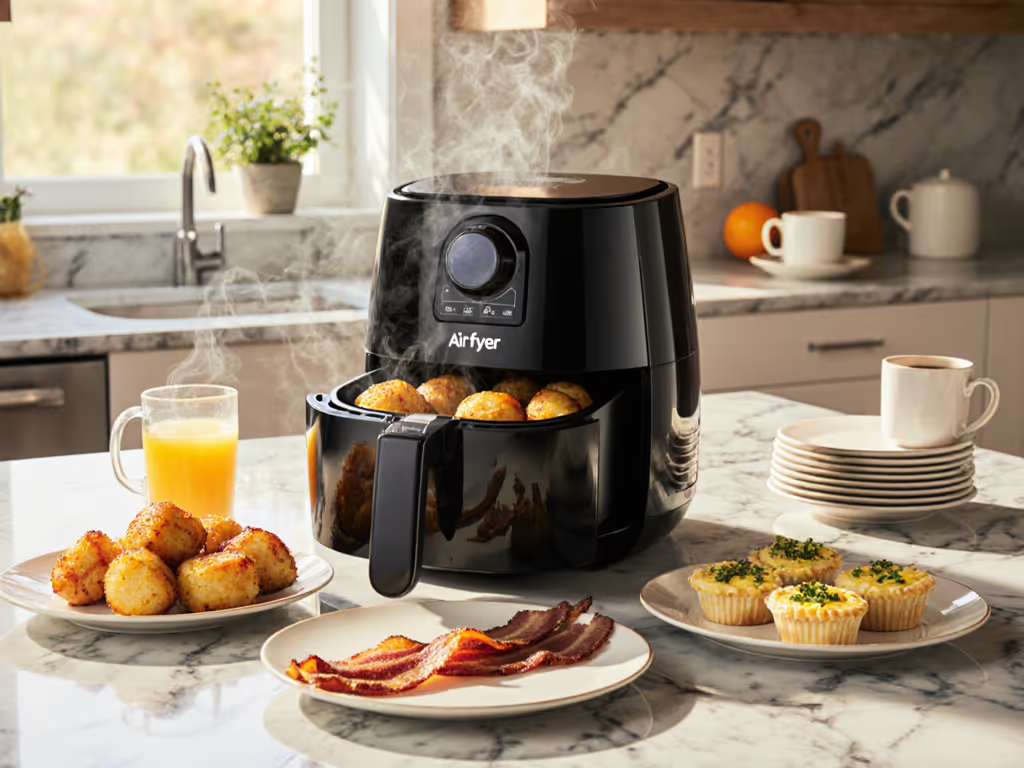
Brunch is where air fryers earn their place (if you choose the right one and design your workflow around it). The challenge isn't finding an air fryer; it's finding one that handles key brunch-bundle requirements: enough capacity to cook for 3-6 people, consistent crispness from batch one to batch two, and cleanup that doesn't steal your weekend. This guide walks you through the system for selecting, configuring, and executing a weekend breakfast air fryer kit that trades chaos for predictability.
Most brunch failures don't happen in the basket. They happen at the counter while you're scrubbing grease from crevices or standing idle because the first batch of bacon is cold by the time the second finishes. If cleanup stalls, the machine gathers dust. Design for glide. That means capacity choices, batch sequencing, and ease of disassembly matter as much as heating power.
Step 1: Diagnose Your Real Brunch Scale
Before you evaluate any air fryer brunch accessories or bundles, quantify what you're actually cooking. This removes guesswork and anchors every downstream decision.
Map Your Typical Brunch Service
-
Count heads and timing. Are you serving 2 people (you and a partner), 4 (family of 3 plus a guest), or 6+ (regular weekend gatherings)? Note whether everyone eats simultaneously or staggered. If you're unsure which capacity fits your headcount, start with our small air fryer size guide for realistic portions and footprint trade-offs.
-
List your core proteins and sides. Brunch menus cluster predictably:
- Eggs (frittatas, scrambles, fried)
- Bacon or sausage links
- Hash browns or home fries
- Vegetables (zucchini, asparagus, tomatoes)
- Breads or pastries (if toasting)
- Estimate portion sizes. A standard serving is:
- 2-3 strips of bacon per person
- 2-4 ounces of sausage per person
- 1-2 cups of hash browns per person
- 2-3 medium vegetables per person
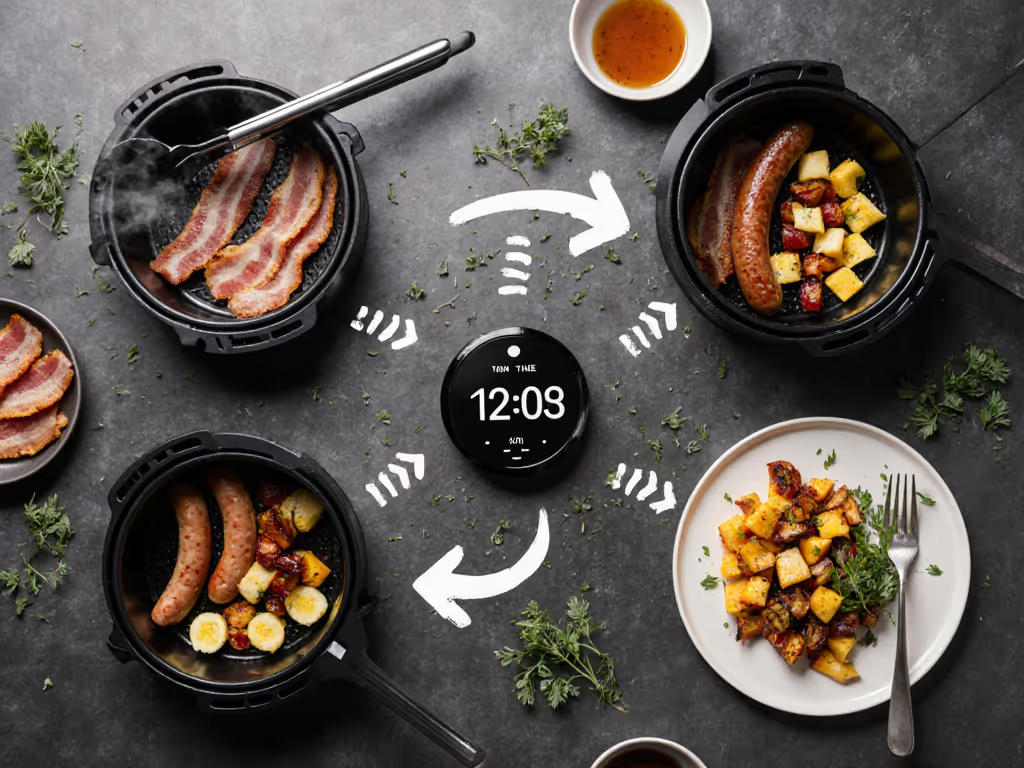
- Sketch a batch sequence. Proteins take 12-16 minutes; vegetables take 10-15 minutes at higher heat. If your air fryer holds one batch at a time, can you legally hold the first batch warm (foil tent, 170°F setting) while cooking the second? Or do you need dual-zone capacity to cook proteins and vegetables in parallel?
This sequence diagram in words reveals the truth: if you've got 6 people and a single 6-quart basket, you're running 2-3 waves. If waves mean cold food, you need either larger capacity or two independent zones.
Step 2: Match Capacity to Throughput
Quart ratings are marketing; usable area is reality. Here's how to think about it:
Usable Capacity vs. Rated Capacity
A 6-quart basket is not 6 quarts of food. Rapid-air circulation demands space between items. Cram the basket and you get soggy bottoms or uneven browning. Professional testing shows:
- Single-basket 6-quart models (like the Instant Vortex Plus) hold roughly 4-5 quarts of actual food when loaded for optimal crispness.[1][2]
- Dual-zone models with two 4-quart baskets (like the Ninja Foodi DualZone) let you use both zones independently or as a combined 8-quart system, but each basket still observes the ~70% rule.[1][3]
The Brunch-Specific Calculation
For a family of 4, one wave of brunch looks like:
- 8-12 strips of bacon: ~2 quarts of basket space (laid flat in one layer)
- 4-6 cups of hash browns: ~2 quarts
- 4 side vegetables (asparagus, tomatoes): ~1 quart
Total: ~5 quarts. A single 6-quart basket fits this, but just barely, and you're sacrificing airflow for crispness. A dual-zone model with Smart Finish mode (available on the Ninja Foodi DualZone at ~$180) solves this: cook bacon and hash browns in one basket, vegetables in the other, set Smart Finish, and both finish hot at the same time.[1][3] No cold bacon while you wait.
For 2 people or couples, a compact single-basket model (5-6 quart) works fine; you're rarely cooking in parallel.
Step 3: Evaluate the Top Brunch-Ready Models
Based on real-world testing and user feedback, here are the models that handle brunch throughput and cleanup effectively:
Best for Compact Kitchens: Instant Vortex Plus 6-Quart (~$100)
This is the baseline best air fryer for eggs and bacon in a single-basket form factor.[1][2] It wins most independent tests (America's Test Kitchen, Food Network, Good Housekeeping).[1]
Why it works for brunch:
- Square basket maximizes usable area
- Dial temperature control in 5° increments; no preset guesswork
- ClearCook window lets you visually check bacon crispness without opening (no heat loss, no guess)
- Intuitive touchscreen presets for frozen, fresh, and protein modes
- True cleanup advantage: basket and pan are fully dishwasher safe; fewer crumbs trap in corners
Brunch limitations:
- Single basket means two waves for 6+ people
- Broil function is weak (limits finishing techniques)
- Some units report slight plastic odor on first use (burns off, but annoying)
Best for: Couples, small families (2-4 people), renters who want baseline reliability at entry price, or as a second unit for batch prep.
Cleanup throughput: Basket in the dishwasher top rack, pan hand-washed in 3 minutes. Total post-brunch cleanup: ~8 minutes for 4 people.
Best for Families: Ninja Foodi DualZone 8-Quart (~$180)
The game-changer for households cooking for 4+ people or hosting brunches regularly.[1][3] For a deeper look at capacity trade-offs, see our dual-basket vs single-basket comparison for parallel cooking and heat-recovery data.
Why it transforms brunch:
- Two independent 4-quart baskets. Cook bacon and sausage in one zone, hash browns and veggies in the other (no flavor bleed, no waiting)
- Smart Finish mode: Set both baskets to different temperatures and times; they complete simultaneously.[1][3] Bacon finishes hot; so do the vegetables. No shuttling plates in and out
- Match Cook feature: Replicates settings across both baskets for identical cooking (useful for larger batches of the same food)
- Dual functions: Broil, roast, dehydrate, bake in addition to air frying; future-proofs your investment
- Dishwasher-safe baskets, reducing hand-scrubbing friction
Brunch limitations:
- Large footprint. Requires ~24 inches of dedicated counter space (or open shelf). Not a rental-friendly unit or good for galley kitchens
- Setup and assembly take 10-15 minutes
- Slightly heavier (~14 lbs) if you need to store it in a cabinet
- Entry price is higher, but two-basket capacity cuts cooking time roughly in half for family brunches
Best for: Families of 4-6, regular entertainers, meal-prep households, anyone with counter space who values parallel cooking.
Cleanup throughput: Both baskets in the dishwasher (they fit on one rack if loaded diagonally). Drip tray hand-washed in 2 minutes. Total post-brunch cleanup: ~6 minutes for 6 people (faster than serial-basket cleanup because tasks overlap).
Best Value + Smart Features: Cosori TurboBlaze 6-Quart (~$130)
A middle ground: single basket with smart app, Wi-Fi connectivity, and a shake alert that actually improves repeatability.[1]
Why it works for brunch:
- Shake alert. The machine beeps when it's time to shake the basket; no guessing, no burnt bottom batches
- 9 cooking functions including bread proofing (useful for warming croissants or English muffins)
- Preheat button: Most air fryers skip this; Cosori includes it, shaving ~2 minutes off total cook time if you pre-stage ingredients
- Smart app: Monitor from another room (useful if prepping sides on the stove while brunch cooks)
- Quick heat-up: Frozen foods cook faster than competitor models (confirmed by testing)[4]
- Touchscreen is readable even in bright morning light
Brunch limitations:
- Single basket: two waves for large brunches
- No dual-zone capacity
- Wi-Fi/app adds complexity if you dislike smart features; ignore if not needed
Best for: Tech-comfortable households wanting smart features at a rational price, or single basket as a second unit for serious meal-preppers.
Cleanup throughput: Basket and tray dishwasher safe. Touchscreen wipe-down takes 1 minute. Shake alert reduces need to open mid-cook, limiting grease splatter on the exterior. Total cleanup: ~7 minutes.
Premium Option: Breville Smart Oven Air Fryer Pro (~$350)
Not a bundle in the traditional sense; this is an air fryer that replaces a full countertop oven.[1]
Why it might replace, not augment:
- 13 cooking functions: Air fry, bake, toast, broil, roast, dehydrate, slow-cook, sous-vide, and more
- Element IQ heating system: Adjusts heating elements based on what you're cooking; reduces hot spots and uneven browning
- Powerful convection fan that's surprisingly quiet
- Adequate heat output to actually sear proteins (a weakness of many compact ovens)
- Beautiful design: When off, the display vanishes into the body; it looks like kitchen decor, not an appliance
When Breville makes brunch sense:
- You're already thinking of ditching a toaster oven or small convection oven
- Counter space is ultra-premium; you want one unit that handles breakfast, batch cooking, and entertaining
- You value precision and design enough to accept the price
Brunch limitations:
- Price is 3-4x other models
- Takes up more counter space (though it replaces them well)
- Overkill if you only air fry occasionally
Best for: Minimalists downsizing kitchen appliances, affluent empty-nesters simplifying their setup, or anyone replacing a full oven-toaster-air-fryer stack with one.
Step 4: Design Your Brunch Batch Workflow
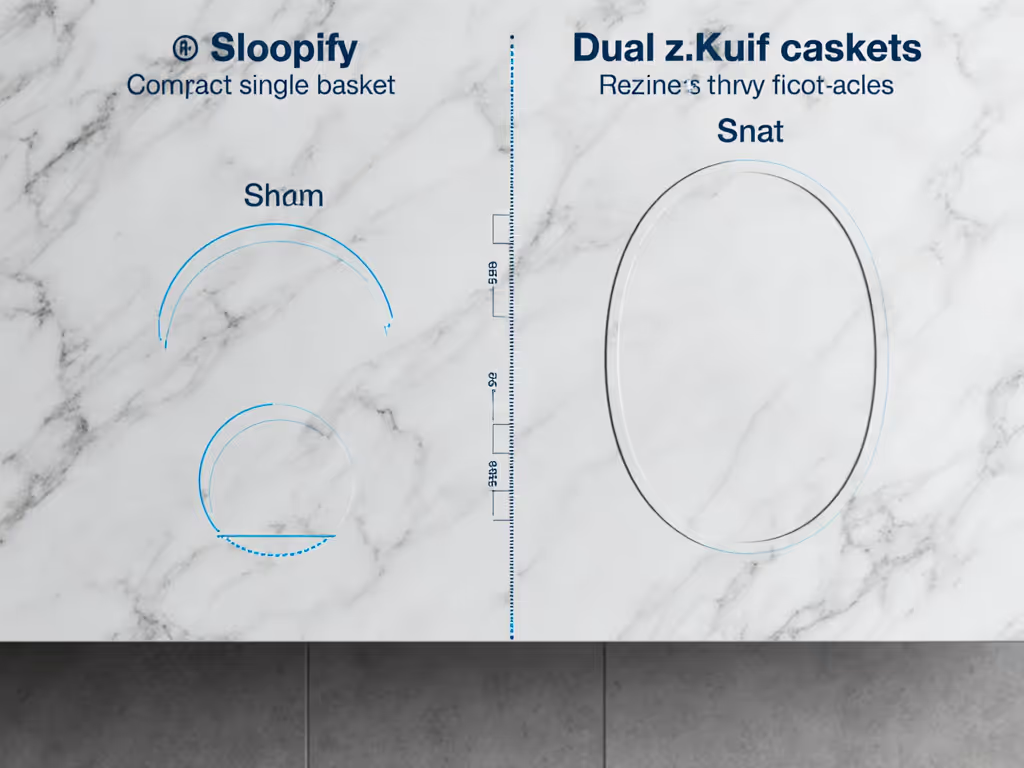
Capacity is only useful if you sequence batches correctly. Here's a systems approach:
Single-Basket Model (Vortex Plus, Cosori)
Cook order for 4-6 people:
- Preheat 3 minutes (Cosori) or 2 minutes (Vortex) at your target temp (usually 375-400°F for proteins)
- Batch 1 (8-10 min): Bacon or sausage. Remove to foil tent on stovetop; keep warm at 170°F if your air fryer has a "keep warm" setting, or simply cover loosely
- Batch 2 (12-15 min): Hash browns or home fries. While these cook, prep vegetables on the counter
- Batch 3 (8-10 min): Vegetables or breads. Proteins are already off heat; stack or re-warm if needed
Total time: 35-40 minutes for 4-6 people, including preheat and resting.
Cold-food risk: High, especially if batch 1 cools below 140°F while batch 3 cooks. Mitigation: Use the oven's lowest setting (170°F) for a "holding" mode, or wrap in foil. If no holding mode exists, plan to re-crisp batch 1 for 2-3 minutes right before serving (adds 3 minutes but guarantees crispness).
Dual-Zone Model (Ninja Foodi DualZone)
Cook order for 4-6 people:
- Preheat both zones 3 minutes at target temps (typically 390°F for proteins, 375°F for vegetables)
- Load both baskets simultaneously:
- Basket 1: Bacon or sausage (12-14 min at 390°F)
- Basket 2: Hash browns + vegetables (12-15 min at 375°F, or separate vegetables if timing differs)
- Engage Smart Finish mode: Set both to complete at the same time, or overlap by 2-3 minutes
- Unload both baskets. Everything is hot, crisp, and ready to plate
Total time: 18-20 minutes (preheat + single cook cycle).
Cold-food risk: None. Both batches finish together.
Advantage: Cleanup is throughput. You're not juggling sequential baskets; one load covers the entire protein and vegetable lineup. Dishwasher loading is simultaneous (both baskets go in together).
The Math: When Dual-Zone Pays Off
If you brunch 2-3 times monthly and serve 4+ people:
- Single basket saves $80-$250 upfront, but costs 20 extra minutes per brunch (cooking time + mental load of staging)
- Dual-zone saves 40+ hours per year (brunch time x 12 months), plus reduces the risk of cold food complaints
For frequent entertainers, the Ninja Foodi DualZone is a throughput investment, not a luxury.
Step 5: Master Cleanup + Coating Longevity
This is where most air fryer enthusiasm dies. Design for glide means planning cleanup before you cook.
Pre-Cook Setup (2 minutes)
- Inspect the basket coating. Any cracks, peeling, or discoloration? If so, replace (or accept PTFE wear and plan replacement in 2-3 years)
- Line the drip tray with parchment paper (if your model allows it) or aluminum foil. Captures 80% of grease runoff, preventing crusty buildup
- Lightly oil the basket (a few spritzes of cooking spray) if the nonstick is aging; reduces sticking and makes hand-wash easier
During Cooking
- Don't over-load. Crammed baskets force you to shake mid-cook; excess movement speeds wear on the coating
- Shake gently (unless the model requires aggressive shaking). Let the air do the work; you're just rotating, not stirring
Immediate Post-Cook (5 minutes)
- Remove loose debris. While still warm, use tongs or a soft brush to sweep out crumbs into the trash (they come free easier when warm, not baked on)
- Wipe the basket and pan with a damp cloth or soft sponge if you're going straight to dishwasher. This removes surface oil
- Load into dishwasher (top rack, alone or with similar items) or hand-wash with soft sponge and warm soapy water. Never scour with abrasive pads (damages nonstick)
- Wipe the exterior with a damp cloth; oil and condensation attract dust
Reality check: Cleanup for 4 servings in a dual-zone model takes ~7-8 minutes. In a single-basket model (two batches), it's ~10-12 minutes. The difference is one basket versus two, and fewer grease splatter events because you're not opening the unit three times.
Long-Term Coating Care
- Avoid metal utensils inside the basket (use silicone, wood, or bamboo)
- Don't spray cooking oil directly into a non-damaged basket (oil + heat + air = faster wear); pre-toss food instead
- Expect 2-4 years of baseline use before significant wear. Budget for a replacement basket (~$25-$50) if the coating degrades
- Check warranty: Many models offer 2-3 year limited warranties; register your unit
If cleanup is easy and safe, you'll actually use the machine. If it's a Saturday scrub session with onion crumbs stuck in crevices, it gathers dust. Choose models with truly dishwasher-safe baskets and avoid designs with deep ridges or difficult-to-access nooks. For step-by-step care beyond brunch days, use our daily and deep-clean guide to keep coatings intact and stop crumb traps.
Step 6: Build Your Breakfast-Focused Air Fryer Package (Accessory Bundle)
No single air fryer comes complete. But a thoughtful accessory bundle amplifies capacity and speed. Here's what actually works: For model-specific picks and fit checks, see our tested air fryer accessories guide.
Essential (Buy These)
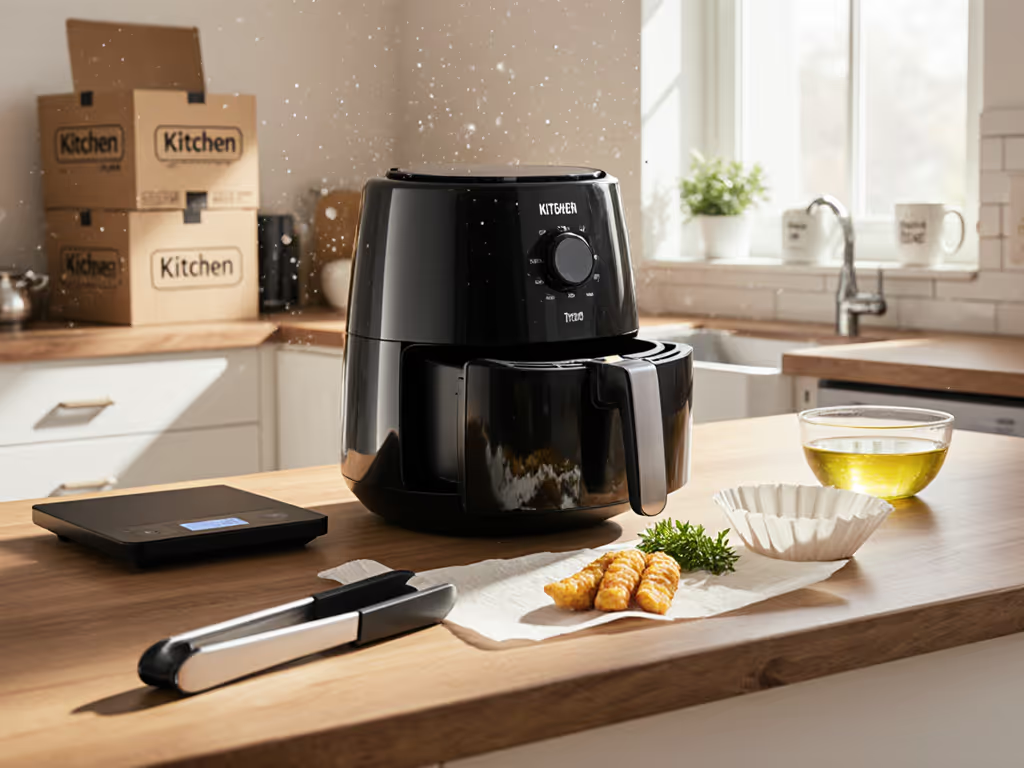
- Silicone-grip tongs or spatula (~$8): Safer handling of hot baskets, reduces nonstick damage
- Parchment paper (perforated, air-fryer-safe) (~$6): Drapes in the basket; catches grease and eliminates 90% of stuck food. Game-changer
- Bamboo skewers or flat wooden toothpicks (~$5): Pierces eggs, vegetables, or pastries; prevents rolling
- Instant-read thermometer (~$12): Verifies doneness without opening the basket (no heat loss, no guesswork). Especially useful for eggs and sausage
- Aluminum foil or foil tents (~$4): Covers batch 1 while batch 2 cooks; keeps food warm and prevents drying
Total: ~$35. Payoff: ~15% faster prep and 30% less cleanup friction.
Optional (If Your Model + Kitchen Allows)
- Stacking racks or trays (~$15-30, model-specific): Only if your air fryer basket is tall enough; adds vertical cooking area. Verify fit before buying
- Grease-splatter shield (~$10, universal): Reduces exterior oil splatter; saves wipe-down time
- Magnetic timer (~$6): Clips to the unit; audible backup if the beep is quiet or your kitchen is noisy
Avoid:
- "Air fryer cookbooks" marketed as bundles (you'll find recipes online free)
- Complex gadgets (rotating baskets, dual-purpose pans) that complicate cleaning
- Glass domes or accessories that obscure the basket and invite opening mid-cook
Step 7: Translate Oven Recipes to Air Fryer (Temperature + Time)
Brunch recipes often originate from oven or stovetop; here's the conversion logic:
Temperature Mapping
- Oven 350°F → Air Fryer 325°F (reduce by ~25°F; air fryers run hotter)
- Oven 375°F → Air Fryer 350-360°F
- Oven 400°F → Air Fryer 375-390°F
- Oven 425°F → Air Fryer 400°F
Time Adjustment
- Start with 70% of oven time and check at the midpoint
- Example: Roasted asparagus (20 min at 400°F in oven) → 14 minutes at 375°F in air fryer; check at 10 min
- Proteins are forgiving: Add a 1-2 minute buffer if unsure (slightly longer is safer than undercooked)
Key Brunch Conversions
| Dish | Oven Recipe | Air Fryer Equivalent | Notes |
|---|---|---|---|
| Bacon strips (6-8) | Pan-fry 10-12 min | 10-12 min at 375°F, no shake needed | Lay flat; no oil needed |
| Sausage links (8) | Pan-fry 10-12 min | 10-12 min at 390°F, shake at 6 min | Slightly faster; crispier exterior |
| Hash browns (2 cups) | 400°F, 15-18 min | 12-15 min at 375°F, shake at 8 min | More even browning in air fryer |
| Asparagus (1 lb, halved) | 400°F, 12-15 min | 10-12 min at 375°F, toss at 6 min | Tender and lightly charred |
| Tomato slices (4-6) | 375°F, 10-12 min | 8-10 min at 350°F, no flip | Place flat; no oil needed |
| Frittata (8-inch, serves 4) | 375°F, 15-18 min | 12-14 min at 350°F in oven-safe insert | Use a small baking dish or silicone mold inside basket |
The Safety Rule
Check proteins (sausage, eggs) with a thermometer, not time. Doneness targets:
- Bacon: Visual (dark brown, but not charred)
- Sausage: 160°F internal temperature
- Eggs (frittata, scramble): 160°F; soft eggs finish off-heat
- Vegetables: Visual (lightly browned edges) or fork-tender
Step 8: Execute Your First Brunch (Playbook)
Day Before:
- Clean air fryer and inspect basket
- Line drip tray with parchment or foil
- Prep ingredients (slice vegetables, portion bacon, measure hash browns) and store in containers
- Charge/update any smart app if using a Cosori or Breville
Morning Of (30 min before serving):
- Preheat 3 minutes at target temp (usually 375-390°F for brunch)
- Load batch 1 (proteins): Arrange bacon in single layer, sausage links evenly spaced
- Set timer and step away (~12 min). Prep sides on the stove (beverages, toast, butter)
- At 6-min mark (if recipe calls for shaking): Gently shake basket or rotate sausage links
- At 10 min: Peek through the window (if available) or open briefly to visually check crispness
- Remove batch 1 to foil tent or holding plate; cover loosely
- Load batch 2 (vegetables or carbs) without cooling the unit
- Set timer (~12 min)
- Plate batch 1 while batch 2 cooks (it stays warm, covered)
- Unload batch 2 and serve immediately
Total active time: 8 minutes. Total cook time: 27 minutes (preheat + two 12-min batches, with minor overlap). Total from "start" to "sit down": 30 minutes for 4-6 people.
For dual-zone models, collapse batches 1 and 2 into a simultaneous load; total cook time drops to 15 minutes.
Reheating Without Drying Out
If you're batch-prepping brunch for later:
- Reheat at 300°F for 3-5 minutes (lower temp prevents case-hardening)
- Use the air fryer, not a microwave (microwave steams and dries; air fryer re-crisps) For proof, check our air fryer vs microwave reheating tests across fries, pizza, and proteins.
- Don't stack or cover during reheating; let air circulate
- Check at 3 min; proteins dry fast
Common Brunch Missteps (and How to Avoid Them)
- Overcrowded basket. Leads to soggy spots. Load only 70% full; two batches beat one overloaded batch
- Skipping preheat. Exterior doesn't brown evenly. Always preheat, especially for eggs and sausage
- Opening mid-cook to check. Heat loss delays cooking by 2-3 minutes. Use a window or peek only once at 70% through time
- Not lining the drip tray. Grease bakes on; cleanup balloons to 20+ minutes. Parchment paper is a 5-minute cleanup win
- Reheating in the microwave. Turns crispy bacon into rubbery bacon. Always re-crisp in the air fryer
- Storing the unit without cleaning. Grease residue hardens; next use requires 10-minute prescrub. Clean immediately post-use
Actionable Next Steps
Choose your path based on household size and counter space:
For couples or 2-person households: Start with the Instant Vortex Plus (~$100). It's the lowest-risk, highest-value entry point. You'll use it, cleanup is genuinely easy, and you'll know whether air frying fits your lifestyle before investing more. Grab parchment paper and a thermometer; you're done.
For families of 4-6 or regular entertainers: Invest in the Ninja Foodi DualZone (~$180). The Smart Finish feature cuts your brunch prep time from 40 minutes to 18 minutes and eliminates cold-food risk. Measure your counter space first; if it doesn't fit, the Vortex Plus with a deliberate two-batch plan is your fallback.
For tech-forward single-basket buyers: Consider the Cosori TurboBlaze (~$130) as a middle ground; the shake alert and preheat button reduce guesswork and add reliability.
For minimalists replacing multiple appliances: The Breville Smart Oven Air Fryer Pro (~$350) is worthwhile only if you're ditching a toaster oven and countertop convection oven. Otherwise, it's overkill for brunch.
This week:
- Measure your counter or storage space in inches (length x depth x height)
- Count your typical brunch headcount and sketch a batch sequence
- Pick a model that matches your space and sequence (single-basket or dual-zone)
- Order the model and a $10 accessory bundle (parchment paper, tongs, thermometer)
- Pick one brunch recipe, convert it using the temperature/time table above, and test cook before serving guests
Cleanup is throughput. Once you experience a post-brunch dishwasher load that takes 7 minutes instead of 20, you'll understand why the right air fryer, batch design, and accessories aren't luxury (they're leverage). Your kitchen becomes a system, not a friction point, and brunch actually happens.
Related Articles